
25 January 2026
"Poet's Post: 'Dulce et Decorum Est'" - a guest post by PoetKen Jones


Please welcome back our own comment community’s PoetKen Jones as the author of today’s guest post! PoetKen is coming to my rescue this week with his own Sunday version of “Mild Monday.” I, too, taught this dark poem often as a professor. To be honest, I’m glad to let PoetKen be the one to introduce you to it!
Poet’s Post : “Dulce et Decorum Est”
by PoetKen Jones
In response to Celia’s call for guest posts, I’m leaping into the breach with a poem and brief analysis. If readers appreciate this initial effort, I’ll offer more, with the caveat that my selections will focus much more on poetry that fits my tastes (tending toward some unpleasant extremes).
I won’t offer much researched biographical material or even close reading. You’ll have to settle for my off the cuff intro, though at first I’ll choose poems I’ve taught in my Creative Writing classes, so I know them well.
As a professor I would have students form a “circle of trust” with their desks and often read the day’s poem with zero editorial content, allowing them to react without my interference. I’ll operate similarly here, reading everyone’s comments but only intervening if I deem it absolutely necessary.
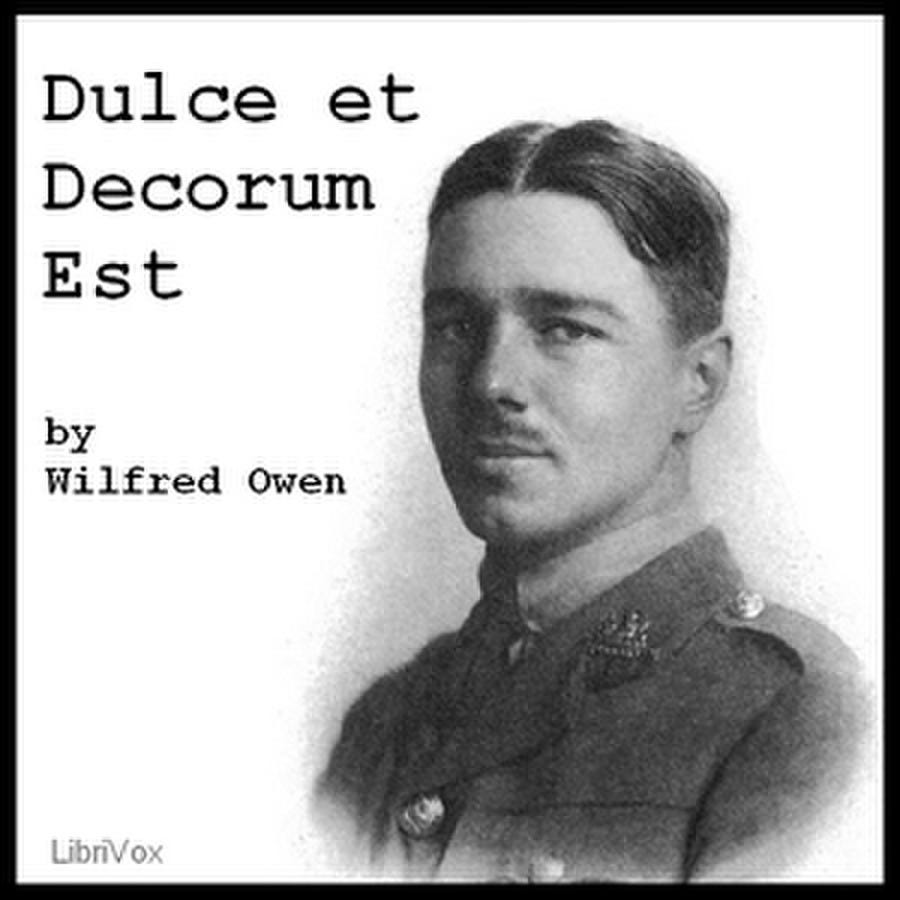
Seeing as many of you have expressed indifference or even disdain toward poetry, I’ll begin with a simple yet impactful classic: the dark, yet hard to ignore, “Dulce et Decorum Est” by Wilfred Owen.
The industrial-scale horrors of World War I produced a new kind of war poetry. Rather than glorifying battles (think Tennyson’s “Charge of the Light Brigade”), the prevailing sentiments addressed the terrible toll. The best remembered (mostly British) poets of the conflict, such as Rupert Brooke and Siegfried Sassoon, produced excellent work, but none to my mind equals the raw reportage paired with poetic skills of Wilfred Owen.
Owen served on the front lines, so his poetry flowed from grim experience. One ironic biographical note: he actually fulfilled his first tour of duty but returned, only to be killed shortly before the Armistice.
As you read the poem below, note the weary tone; picture the exhausted troops trudging toward a respite interrupted by the gas attack, the instant urgency of the need for masking (and technically effective exclamation points), the startling, disturbing image of the “gurgling…frothing” boy who unfortunately won’t survive, and the final irony of the jab at those comfortable elites who know Latin epigrams well enough to understand that this soldier/poet has had enough of the comforting lies that have thrust him and his companions into mortal danger. Enjoy 🧐…and think 🤔.
Bent double, like old beggars under sacks,
Knock-kneed, coughing like hags, we cursed through sludge,
Till on the haunting flares we turned our backs,
And towards our distant rest began to trudge.
Men marched asleep. Many had lost their boots,
But limped on, blood-shod. All went lame; all blind;
Drunk with fatigue; deaf even to the hoots
Of gas-shells dropping softly behind.
Gas! GAS! Quick, boys!—An ecstasy of fumbling
Fitting the clumsy helmets just in time,
But someone still was yelling out and stumbling
And flound’ring like a man in fire or lime.—
Dim through the misty panes and thick green light,
As under a green sea, I saw him drowning.
In all my dreams before my helpless sight,
He plunges at me, guttering, choking, drowning.
If in some smothering dreams, you too could pace
Behind the wagon that we flung him in,
And watch the white eyes writhing in his face,
His hanging face, like a devil’s sick of sin;
If you could hear, at every jolt, the blood
Come gargling from the froth-corrupted lungs,
Obscene as cancer, bitter as the cud
Of vile, incurable sores on innocent tongues,—
My friend, you would not tell with such high zest
To children ardent for some desperate glory,
The old Lie: Dulce et decorum est
Pro patria mori.
Notes: Latin phrase is from the Roman poet Horace: “It is sweet and fitting to die for one’s country.”
Peace ✌️
PoetKen Jones
See www.poetken.com
A timely offering PK and a needed reminder to balance the urge to war. One must deeply question whether the gains made are worth the cost exacted. Often not me thinks. Sadly we are usually not given a choice, either by our own leaders and/ or by circumstance. Sometimes I think I am too much like my Cherokee ancestors who, while promoting peace, were also enlivened by war. The compulsion to battle is sometines easily triggered and can be difficult to moderate. I hope very much I am wrong, but I think we are dancing the edge of military conflict right now. Wars tend to unify populations and the world is painfully polarized. The natural human inclination is to resolve the pressure of unbearable inner conflicts through outward violence. Unfortunately we now have the capability to destroy the entire world in our attempts at resolution. Admiral grandpa talked about this in his books - we really cannot afford all out war anymore amongst the superpowers, so we nibble away at each other, posture and threaten, undermine from within, battle through proxies and hope it will not come to all out conflict.
I like poetry but find it difficult to read and understand at times. Especially poetry that you have to interpret and guess what it really means. These exhaust me. Not this poem though. Sadly I understood it all.